
The Best Native Plants for Bees in Southern California
A bee-friendly garden starts with native plants. If you want to support local pollinators in Los Angeles, whether you host a hive or simply love backyard wildlife, planting native species is the most impactful thing you can do. Native plants are adapted to California’s climate, meaning they thrive with less water, require less maintenance, and provide nectar bees absolutely love.
Why Native Plants Matter
Southern California’s honeybees forage best on plants that bloom reliably through dry seasons and require little intervention. Native gardens also attract native bees, butterflies, hummingbirds, and beneficial insects, creating a rich, living ecosystem in your yard.
Top Native Plants for Bees in Los Angeles
California Sage (Salvia species)
A bee magnet. Blooms for months and thrives in hot, dry gardens.
Buckwheat (Eriogonum species)
One of the best forage plants for both honeybees and native bees. Beautiful rust-colored seed heads in fall.
Manzanita
Early-season nectar source when little else is blooming.
Lavender (technically Mediterranean, but California-adapted)
Long bloom cycle, fragrant, and always buzzing with bees.
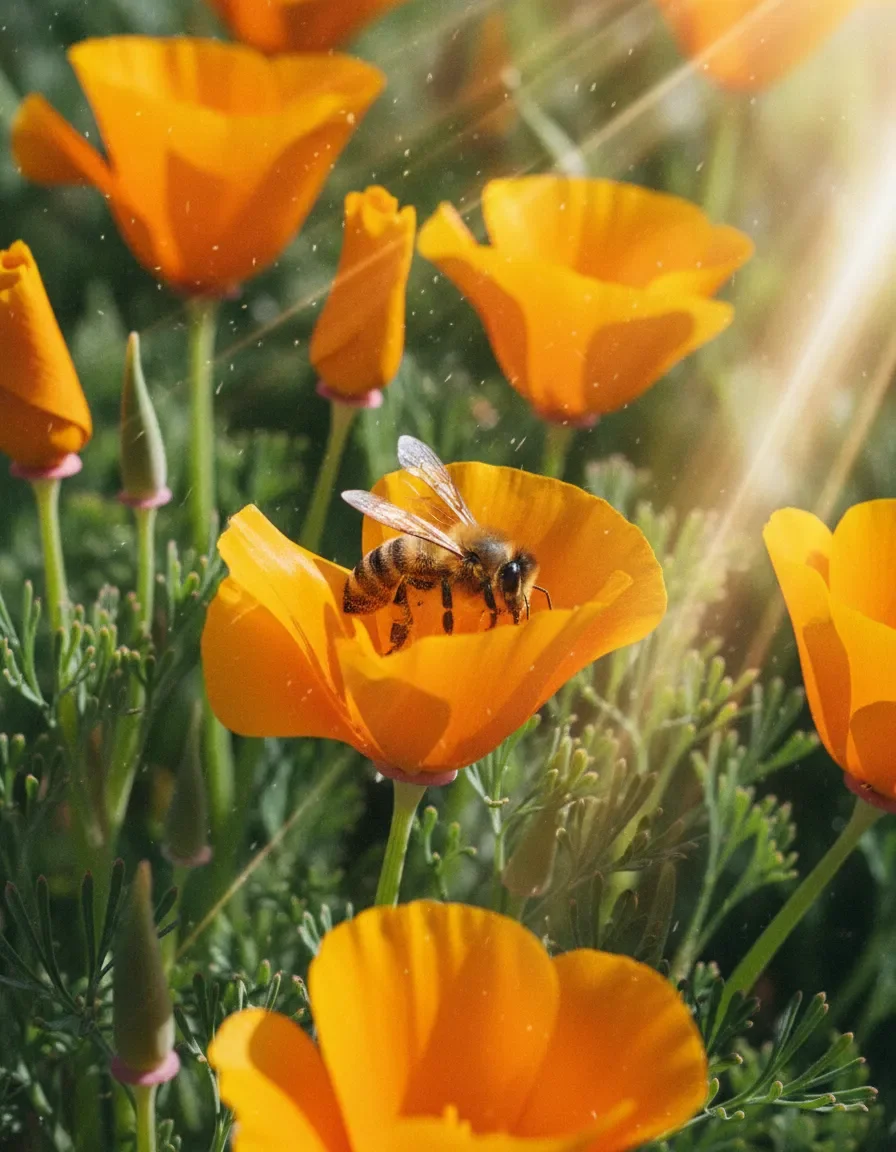
California Poppy
Vibrant, drought-tolerant, and beloved by pollinators.
Toyon
Winter berries attract birds; summer blooms support bees.
Narrow-Leaf Milkweed
Supports monarch butterflies and brings pollinators to the garden.
Cleveland Sage
Iconic SoCal scent with high nectar yield.
Designing Your Bee Garden
Plant in clusters so bees can forage efficiently.
Choose plants that bloom in different seasons.
Avoid pesticides and systemic treatments.
Add a shallow bee water dish with pebbles.
A Final Tip
If you host a hive with us, we offer personalized plant recommendations based on your neighborhood, sun exposure, and water preferences, making your garden a true pollinator sanctuary.